Thursday, June 3, 2021

Judith S. Kestenberg, M.D.

Judith Ida Silberpfennig Kestenberg, M.D. (1910 - 1999) was Edith Buxbaum's analysand and friend. Both women left Vienna in 1937. They were eight years apart; Judith was the younger. Each was a strongly-identified secular Jew and married men who were secular Jews. Judith told me that when she picked up the newspaper the first word she looked for was "Israel." In 1965, Buxbaum taught in a kibbutz. One of her 1965 diaries reports her saying wistfully: "Maybe we should have settled in Israel instead of the United States."

I'm listening to the tapes I made with Dr. Kestenberg in December 1994. (What you see here will appear in chapter two - the New York chapter - of the book I'm writing on Buxbaum. I am finding it easier to write on this public blog than on an impersonal computer page or my five by eight index cards. Strange, this internet age). 

In the December, 1994 interview which took place during the American Psychoanalytic Association conference-week when I had presented a paper on "Edith Buxbaum and the Seattle Psychoanalytic Institute," Dr. Kestenberg told me she was scared when she came to America. "I was scared. I didn't know how scared I was. Nunberg told me how scared I was."

I returned to the Kestenberg tapes after contact with Klara Naszkowska, PhD.,* "a cultural ... historian specializing in the early history of psychoanalysis with a focus on Jewish female analysts." Out of the blue, Klara emailed me, the most exciting communication I have had with an academic (outside my family) in a long time. 

In her June 1st email, Naszkowska writes: "I am a cultural historian, currently researching and writing a paper on Judith Kestenberg. I was wondering if you could advise me where to search for possible notes from the analysis Kestenberg (then Silberpfennig) had with Buxbaum in 1938 or 1939, in New York." 

Notes from the analysis? I interviewed Dr. Kestenberg! And, yes, I have the tapes! Not transcribed, but so far the listening is ok (they need to be transcribed). My granddaughter is visiting. She follows me as I run through the house trying to remember if the tapes are in my "Buxbaum file cabinet" or "Buxbaum closet." The "Buxbaum closet," of course. Zalia and I are both excited. She says she's never seen tapes like these. She picks up one and holds it in her hand. It is tiny, about an inch total. I think they're called "shoe-box tapes.

I am remembering how welcoming Judith Kestenberg was when I entered her home on Long Island.  She was formal; yet, welcoming. I liked her. She was sweet and reminded me of my European-born Aunt Miriam, though Judith didn't seem to have the fear in her face that Miriam had. Perhaps that had to do with their respective husbands.

Judith's husband, Milton Kestenberg (1913-1991), a lawyer, had died three years earlier. They were married over forty years, and she missed him profoundly. Together they had established the International Study of the Organized Persecution of Children

Judith worked tirelessly at their Sands Point, New York home interviewing survivors for her Holocaust Child Survivor Studies work. She also had an office in the City. Judith visited Seattle sometime in the 1940s when Buxbaum invited her to speak on female sexuality.

Kestenberg and Buxbaum did not know each other in Europe. They met in New York at a seminar on psychoanalytic theory. It was 1938. Buxbaum became Kestenberg's first analyst in America. When Buxbaum left for Seattle with her husband, Fritz Schmidl, in late 1946, Judith entered into a seven-year analysis with pioneer child analyst, Marianne Kris-Rie (1900-1980), who, when in Europe, had studied with Anna Freud. Kris-Rie was the psychiatrist who treated Marilyn Monroe from approximately 1957 to 1961. 

When living in New York City, Buxbaum was in private practice, from approximately late 1937 until 1947. She also taught for the Cooperative School for Student Teachers at 69 Bank Street. She was making $1800 for a nine-month teaching year.  I know this from a June 17, 1937 letter the school sent Buxbaum when she was still living in Europe: Her address was V11 Zieglergasse 57, Vienna Austria. According to the 1994 tape she made with me, Judith Ida Silberpfennig was living near the University of Vienna at the time. 

...more to follow...

*Klara Naszkowska, PhD is a 2020/2021 Visiting Scholar and 2019/2020 Fulbright Visiting Scholar at Union Theological Seminary (Columbia University); Founding president of the International Association for Spielrein Studies (www.spielreinassociation.org). As the head of the scientific committee, she is organizing the first international conference "Sabina Spielrein and the Early Female Pioneers of Psychoanalysis” on April 9-11, 2022 in Warsaw.   

Notes

Grinberg, Jaime G. A. "CHAPTER TWO: The Cooperative School for Student Teachers." Counterpoints 234 (2005): 11-21. Accessed June 8, 2021. http://www.jstor.org/stable/42978657.

https://psychotherapy.psychiatryonline.org/doi/10.1176/appi.psychotherapy.1966.20.1.89


Kestenberg, J. (1994, December) Personal Interview, Dec. 1994

Sossin, K.M., Loman, S. & Merman, H. Remembering Judith S. Kestenberg, Our Mentor and Friend. American Journal of Dance Therapy 21, 53–56 (1999).https://link.springer.com/article/10.1023%2FA%3A1022890629390  

https://doi.org/10.1023/A:1022890629390, March 1999

https://www.youtube.com/watch?v=gl-JhSRlwLQ 

Letter to Buxbaum from Cooperative School for Student Teachers, Sixty-Nine Bank Street, New York , New York, June 17, 1937.


 

Friday, April 26, 2019

Egon Schiele's Wife

Image result for egon Schiele's wife
When WWI ended on November 11, 1918, Edith was sixteen years old and in high school. She was twelve when the war began. Yet, her writings and interviews do not focus on war (except for the death of her friend's brother) or the anguish people were experiencing during this time. She told one interviewer that she needed to leave politics behind her. Presumably war, as well. Anguish she dealt with in the therapy session or the analytic frame.
Nor does she mention the outbreak of the Spanish flu which killed 50 million people, including Egon and Edith Schiele. One wonders if Edith Buxbaum wrote about this period of her life in the diaries she kept and which were unfortunately discarded by well-meaning people after her death. Her teenage years were filled with psychoanalysis and study groups, where even at age fourteen she was reading Freud.  Here, there was talk of war and politics.
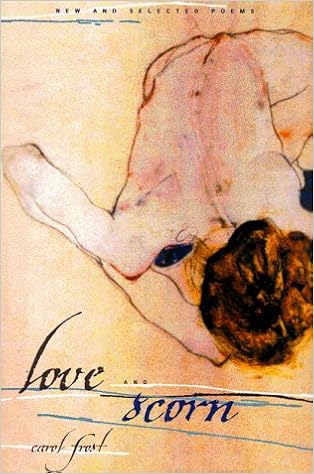
A few years ago, I went to Vienna to meet Edith's step- grandson, Gusti, I also found Vienna Muses; and at the Leopold Museum and the Albertina, I "met" Egon Schiele and Edith Harms Schiele. Edith Buxbaum did not meet them but she frequented these museums. I invite you to listen to American poet, Carol Frost, read her poem, Egon Schiele's Wifeor you may read it below:
Egon Schiele's Wife
More since her illness he tried to think of her not purely as a wife --

    as someone who finds herself trying to please, to
    be of his mind.
                               The spread legs and bunched up slip,
                               the reddened labia, and an almost compulsive
                                              abandonment:
    they were his wishes.

                                                   As for her --
sprawled like a goose sideways down the wind whenever he drew
             her sex --
what was enfevered began slowly to fade
and she was lost to him (you know how that feels?).

He drew her face, then gave her pen and paper
so that she might leave behind for him
love's avowals. In the weirdly devastated eyes
of the earlier self-portraits, where aloneness exaggerates everything,

he hadn't yet mourned yet almost seemed to know. . . .
                               Ah, she'd have gladly lingered
                               in that yellow and ocher room that willed and
                                              willed and willed her,
for just a bit longer,
                                              but found Death determined
and went with him, whose whispered secrets and stale fragrance
mingled with decay excited her. The artist stepped to the morning

window and looked at the quieted-down square. -- A clearer
feeling now: the nude heart in ecclesiastical colors
above the city's grayness. Their erotic life.
And something more, exhaustion,
like halos in an unexpected gust of wind surrounding a tree's last
             leaves.
Carol FrostLove and Scorn: New and Selected Poems

Wednesday, April 24, 2019

Poldi and Egon Schiele


While reading Buxbaum's case studies, I encounter a ten-year-old boy named Poldi, who, according  to Buxbaum herself, should not have been in an analysis; but she wanted to try. This was Vienna, 1927, when she was presenting cases in Anna Freud's child analysis seminar.
Poldi's story connects me to the Expressionist painter, EgonSchiele, brilliant and crazy in his way of contorting the human body, as if it were not human at all, rather as much an animal as a man, woman or child. The internal conflicts, the moodiness and self-examination via canvass. The exactness of his animalistic shapes of human beings just like us, like me. In his mind, body parts are rearranged – an arm where a leg might be, eyes looking half-crazed, a shoulder here, a leg there. (See Alessandra Comini)


Egon Schiele and his magnificent oeuvre of Expressionist art heralds the time of this strange and brilliant artist who died too soon, in 1919, at the age of twenty-eight, of the Spanish flu, three days after his wife, Edith Schiele, also of the Spanish flu.

Poldi is just ten when Buxbaum introduces him to us, via Anna Freud’s child therapy session. He continues therapy with her through age twelve, half the age of Egon Schiele when he was painting his finest works, including “Egon Schiele: Self-Portrait” (1912)

I think of Poldi in connection with the artist Schiele, because from the age of five Poldi masturbated publicly, as Schiele's characters do...

That's all for now. I won't give away the whole story, but I'll be back soon. I want my note cards, files and folders to have more of a life than just sitting in their flash drives.

Thanks for being here,

Esther


Monday, August 28, 2017

On Writing, Psychoanalysis and Racism: Zaretsky's Essay


I am reading Eli Zaretsky’s essay “Psychoanalysis, Authoritarianism, and the 1960s” in Psychoanalysis and Politics: Histories of Psychoanalysis Under Conditions of Restricted Political Freedom, edited by Joy Damaousi and Mariano Ben Plotkin (New York: Oxford, 2012); and I am disheartened. 

I am disheartened because while I continue on a project I began two decades ago – the biography of Edith Buxbaum – I am increasingly plagued by the whiteness of my subject. Recently I was invited to write about African American psychoanalysts for BlackPast.org. 

The  “13,000 page reference center is dedicated to providing information to the general public on African American history and on the history of the more than one billion people of African ancestry around the world.”  I’ve written two entries so far, one on Veronica Abney, a training and supervising analyst with the Institute of Contemporary Psychoanalysis out of LA and one on Dr. Margaret Morgan Lawrence, who just celebrated her 103rd birthday.

I chose to write my second entry on Dr. Lawrence, a psychiatrist and the first African American psychoanalyst in the United States, because she was in New York City the same time as Dr. Buxbaum, and I wanted to see if their paths crossed in any way. They did not. The only place in which I found a tiny connection was via the "B" column in a biographical lexicon of Psychoanalysts -  Psychoanalytikerinnen: Biografien A-Z.  Buxbaum’s name was at the end of column B and that of Dr. Lawrence’s Caucasian mentor, Dr. Viola Bernard, was at the beginning. Not a real connection, but I was interested.

In the late 1940s, Dr. Bernard had helped Dr. Lawrence wade through the racism that existed in New York’s psychoanalytic community, specifically Columbia University’s Center for Psychoanalytic Training and Research, where Lawrence received certification in 1948. By then Buxbaum was practicing psychoanalysis in Seattle; and since she was not a medical doctor, she would not have been practicing in hospitals, such as Harlem Hospital, where Lawrence worked.

I am disheartened by Zaretsky’s essay because he writes in a language that is not mine. His writing is inaccessible to anyone not steeped in psychoanalytic theory and, as such, he does little to move psychoanalytic knowledge forward. More important, Zaretsky continues to write within the context of whiteness. For instance, McCarthyism was not “the largest wave of repression in American history,” as he writes. (p. 236) What happened to slavery?

Especially in times like these, when the United States president belittles forward-moving thinking, one would hope that scholars, such as Zaretsky, would be more aware of the importance of including the subject of race into institutional histories, of which psychoanalysis is just one. Still, I will continue with his essay and the others in this collection, which examine restrictions of political freedom in Italy, Spain, France, Hungary, Brazil and Argentina.


Monday, April 1, 2013

Orr, Douglass Winnett M.D. (1905-1990), Father of Seattle Psychoanalysis

by Esther Altshul Helfgott, Ph.D.

This essay first appeared at HistoryLink.org, The Free Onlne Encyclopedia of Washington State History

Douglass Winnett Orr helped found Seattle's Northwest Clinic of Psychiatry and Neurology and the Blakeley Psychiatric Group in the 1940s. He was the founder, with Edith Buxbaum (1902-1982), of the Seattle Psychoanalytic Institute and served as its first director. In 1948 he helped establish Seattle's Pinel Psychiatric Hospital, which was in operation from 1950 to 1960. While in Seattle, he became a charter member of the San Francisco Psychoanalytic Institute and Society; after leaving Seattle in 1965, he helped found the San Diego Psychoanalytic Institute and Society and helped to build the Los Angeles Psychoanalytic Institute. Orr was a member of the King County Medical Society from 1941 to 1967. He died from cancer in 1990 while he and his wife were living in a retirement village near Santa Rosa, California.

Early Life

Douglass Winnett Orr was born on August, 29, 1905, in Lincoln, Nebraska, one of five children of Hiram Winnett Orr (1877-1956), an orthopedic surgeon, and Grace Douglass (1882-1962), a physical-training teacher. His domestic environment included music, books, religion, and a renowned book-collecting father who wrote medical texts and invented an orthopedic procedure called the "Orr treatment." The son had much to live up to. His mother was active in the Congregational church and the Camp Fire Girls. She wrote A Layman's Guide to Ecumenicity, which was published in 1956 by the National Council of the Churches of Christ in the USA. Orr grew up with four siblings: Ridlon Willard Orr (1908-1967); Martha Josephine Orr Danielson (1910-1996); Dorothy Grace Orr Klein (1913-1991); and Gwenith Greene Orr Sheldon (1919- 2009).

Douglass Orr graduated from Lincoln High School in Nebraska on June 1, 1923, and was awarded the Senior Prize for achievement. According to Orr's daughter, Nancy Orr Adams (b. 1941), her father's family attended church every Sunday, and the children went to weekly Sunday school. When Douglass became an adult he wanted nothing to do with religion; he and his wife would raise their children in a secular environment. He would also rebel against his father's pressure for him to study orthopedic medicine.

Higher Education

Orr attended the University of Nebraska from 1923 to 1926, where he studied the Greek classics and English. He transferred to Swarthmore College, from which he received his undergraduate degree in 1928. There, he was a member of the Delta Upsilon fraternity and Phi Beta Kappa. Upon graduation, he taught English and philosophy at the short-lived (1927-1932) Experimental College in Madison, Wisconsin, established by progressive educator Alexander Meiklejohn (1872-1964). Orr would retain his lifelong fondness for the humanities. One summer while in England he developed an interest in Virginia Woolf and the Bloomsbury group. Although he gave up on the idea of getting a Ph.D. in English, his work on Woolf was rewarded in 2004 when two of his texts on the subject were published posthumously.

In 1931 Orr married social worker Jean Walker (1907-1998), whom he met in Madison. He enrolled in medical school at Northwestern University's school of medicine and earned his medical degree in 1935. Soon after, he went to England on a Barnett Fellowship, where he and his wife wrote Health Insurance with Medical Care: The British Experience. The couple had two children, Stephen Winnett Orr (b. 1940) and Nancy Orr Adams (b. 1941).

According to Nancy Orr Adams, Orr was determined not to follow in his father's footsteps by specializing in orthopedic medicine; despite his father's disappointment, Orr became a psychiatrist. He went to Chicago to train as a psychoanalyst and to enter into analysis with N. Lionel Blitzsten (1893-1952), the first training analyst in Chicago and the first president of the Chicago Psychoanalytic Society, formed in 1931.

At the Menninger
read the rest of this essay at HistoryLink.org, where photos are also included.

Wednesday, October 3, 2012

Interleaving: Writing and the Auto/Biographical Process

This essay first appeared in The Seattle Star

I have always had an ambivalent relationship to The Academy. On the one hand I love research; on the other hand, when I am actively engaged in a research project, as I am now, I feel separated from the community in which I live. So when The Seattle Star awakened from its sixty-five year-old sleep, I offered to write a column on “Writing and the Biographical Process.” I thought it would give readers a chance to share in the nitty-gritty of what one writer does during the day; and it would help me feel less isolated in the particularities of my writing life.

Let me introduce you to my writing “subject,” Viennese-born Seattle child psychoanalyst Edith Buxbaum, Ph.D (1902-1982). After escaping the Nazis in 1937 and working as an analyst and teacher in New York city for ten years, she moved to Seattle to help build the Seattle Psychoanalytic Institute. Her pedagogical influence extended to the Ryther Child Center, the Little School of Seattle (now of Bellevue) and to social work and education communities, such as the University of Washington.

Biographical and autobiographical writing entwine. Why did I choose to write about a woman I never met and had no ties to except for my interest in Jewish women’s history and the field of psychoanalysis? Immediately the writer’s self is injected into the story. Sometimes Dr. Buxbaum turns up in my dreams, and in the morning I have to sort out the dream so it won’t get mixed up with biography.

I tend to compare activities. If I am writing about Buxbaum’s nine-year-old self, I think of what I was doing when I was nine years old. Whereas nine-year-old Edith was walking, probably with her mother, on Viennese cobblestones and waving to Emperor Franz Joseph as he passed in his carriage, as she told an interviewer in 1978,* I was skating up and down Park Heights Avenue in Baltimore, MD, dodging customers at the fruit and vegetable stand. So that extraneous material does not interfere with my story of Buxbaum’s life, I have created an Appendix in which I deposit “My Buxbaum Diary.” This is what I will share with you in these columns, at least some of it.
Relationships and connections are what make story.

Figure this: The Seattle Star, which came into existence in 1899 (the year my parents were born), ended its first historical phase in 1947, the year Edith Buxbaum moved to Seattle. She arrived in this fair city on the first of January of that year. She would have had the opportunity to read The Seattle Star for eight months from January until its last edition came out on August 13, 1947. I have no evidence that Dr. Buxbaum subscribed to The Seattle Star, but I will speculate that she picked up a copy, along with the Seattle Times and the P.I., at one of the newsstands around Spring Street where her office was located. (I have not yet found out how much the paper cost in 1947, but I did discover that it cost two cents in 1934. Perhaps readers will remember buying The Seattle Star in the forties and write in to let me know how much they paid for it).

The Seattle Star
‘s second historical phase began January 1st, 2012, and if Buxbaum were alive today and computer-literate, as I expect she would be, she would be fortunate to read The Seattle Star on-line and to find a column devoted to her.

A Seattle Star carrier in 1943


*From Vienna to Seattle: Dr. Edith Buxbaum Remembers An Interview with Lawrence H. Schwartz, M.D. May 14 and June 11, 1978. Seattle: Seattle Institute of Psychoanalysis, 1990.

Thursday, August 2, 2012

Why write biography: Dr. Siegfried Berthelsdorf provides an answer

An addendum to The Edith Buxbaum Journal

I spent a good part of today searching for page numbers for footnotes in an essay I'm finishing up. The writing's finished but my citations aren't. No one's fault but my own. Did I really think I would remember the page number to footnote 19 or to footnote 23 or to footnote 33? Nonetheless, good things came from my search, not the least of which is an answer to the question "Why write biography?"

To find answers to the footnote questions I went through my 2003 correspondence with Siegfried Berthelsdorf, M.D., the first psychoanalyst to set up practice in Portland, Oregon. He had been in seminars with Edith Buxbaum and had other professional contacts with Seattle analysts so I wrote to him with a series of questions.  He was very kind and sent me two lengthy and quite lovely letters.

In the first of his Dec. 13th letter, he wrote a paragraph that I should have long ago taped to the bookshelf next to my desk:

Dear Doctor Helfgott:

Siegfried Berthelsdorf, M.D
You are to be admired for your willingness to tackle such a demanding job as a biography. It must take an enormous memory to recall, file, and reconstruct notes of what fragments of information come from wherever, where you have placed them in the unpredictable accumulations, half finished bits and conflicting fragments from Lord knows what or how reliable a source. Yet a biography is very much in order of Buxbaum, as how else can the many who follow in her work be aware of who has gone ahead in the past, who made what contributions that we use without recognition of the creativeness of the predecessor. Sic transit gloria ... [Thus passes the glory of the world] ...

Needless to say, my memory does not hold all that I'd like it to and reconstructing half finished bits and conflicting fragments is, as today's work reflects, a tiresome job; but in the end it's worth it, especially for the connections I make along the way. Dr. Berthelsdorf died on June 16, 2011 at the age of 99. Here is his Obituary.


Photo: The Oregonian, February 13, 2011

Tuesday, July 24, 2012

Serendipity in the University of Washington Archives: Dr. Helen Remick, The Little School, Buxbaum, and Courtesy Markers*

An addendum to The Edith Buxbaum Journal

I had been searching through The Little School files one morning, while looking for information on Edith Buxbaum’s psychoanalytic relationship to The Little School, when I came across the name of Helen Remick. I recognized her name from 1977 when I was teaching an American Women’s History class for the Women’s Studies Program at the University of Washington.  At the time, Dr. Remick was the Affirmative Action officer. I saw her once at a Women’s Studies meeting when there was a town-gown discussion. As I remember it, Dr. Remick represented the gowns and though I was a graduate student at the time, my heart was with the women of  the town, organized by Radical Women and other liberation groups. I don’t remember much about the meeting except that the room was packed with women and there were uncomfortable feelings on all sides of the political spectrum, alongside mutual feelings of sisterhood. I didn’t continue going to Women’s Studies meetings. I was a single parent and had three children to take care of, in addition to my graduate work in history.
 

Those were different times, the 1970s, and now we’re at 2012. It’s been a long time since I finished my graduate work, having obtained the doctorate in 1994. I’ve raised three children to become professionals in the field of education and continue my writing and teaching outside the university setting, although I use its libraries and research facilities liberally. My gratitude toward those facilities take fullest expression in my use of the university’s archives, specifically Suzzallo’s Special Collections. Here I found Dr. Remick’s name in a Little School folder.  What was it doing there? It turns out that at the same time Dr. Remick was an affirmative action officer and attended that Women’s Studies meeting, she was the parent of a Little School pupil when it was in the Bellevue facility.
Dr. Eleanor Siegl
Dr. Remick was writing a letter asking Eleanor Siegl, director of the Little School, to address her as Dr. Helen Remick or, depending on the school’s protocol, Helen Remick or Ms. Helen Remick, but not as Mrs. Helen Remick or Mrs. Jack Remick. As in the Women’s Studies meeting, thanks to the 1970s women’s movement, we have clearly spelled-out feminist distinctions. Eleanor Siegl did not call herself a feminist, to my knowledge, but she expressed feminist leanings in pushing for a career outside the home. In many communications, however, Eleanor Siegl was Mrs. Henry Siegl, wife of the Seattle Symphony’s Concert Master.The two women expressed their feminism differently. As Dr. Remick was to tell me in a 2011 interview: “We had different feminist sensibilities.”

I am well-acquainted with Dr. Remick’s husband Jack Remick, a well-known Seattle poet, novelist and teacher. I had emailed Jack to ask him for Helen’s email to see if she was interested in talking to me about the letter she wrote to Eleanor Siegl and about their child’s experience at The Little School. I also asked Jack if I could interview him and eventually spoke with the whole family, including their daughter, Justine, now a university professor. From the Remick family I gained a fresh perspective on The Little School, a testament to the importance of personal interviews and of archival collections, especially in the internet age where facts can be changed to suit the moment.

Dr. Helen Remick
Dr. Remick retired from the University of Washington in 2005. She is now a practicing quilt artist, as thorough and exacting in this craft as she was as an affirmative action officer.

I don't know how much of a priority the name issue was for Edith Buxbaum, but it wasn't negligible.  She used the signatures Edith, Edith Buxbaum, Edith Buxbaum, Ph.D., Edith B. Schmidl, Mrs. Fritz Schmidl and, with her husband, Mr. and Mrs. Fritz Schmidl. In the summer 1982 bulletin (vol. 2, no.6, p.1) of the Psychoanalytic Society of Seattle (currently called the Seattle Psychoanalytic Society and Institute) in which Buxbaum was memorialized, her colleague Gerald B. Olch, M.D. (1921-1999) wrote: "I had the impression that she used her married name more frequently after her husband's death, as if it then became acceptable to her to reveal how much she had depended on him."


*The term, Courtesy Markers, is from Dr. Remick's letter to The Little School Staff. I had not heard of the term before reading the letter.

Tuesday, July 3, 2012

Buxbaum/Schmidl Residences, Seattle

An addendum to The Edith Buxbaum Journal

First residence, 1947 - 1957

539 32nd South
Seattle, WA.
Phone: Prospect 8601
(Mt. Baker section of Seattle)

King County Tax Assessor’s Office
Tax Parcel #125020-1665
built in 1910
renovated 1998

Phone book listing
August 1947
Schmidl, Edith B. Dr.
539 32nd South
Prospect 8601

Source: Seattle and Vicinity Telephone Directory, Pacific Telephone and Telegraph Co., p. 357
University of Washington Special Collections, manuscript division

Schmidl, Fritz – also listed w/ same address
Phone book listing
June 1948

Source:Seattle and Vicinity Telephone Directory, Pacific Telephone and Telegraph Co., p.382
Seattle Public Library, History and Travel Department


Second Residence, 1957 - 1982


6036 Upland Terrace South
Seattle, WA.
Tax Parcel # 8952900030 
Built in 1956
1983 – sold to Mayumi  Tsutawaka 
Quick claim deed – no money changed hands
June 3, 1991 Mayumi  Tsutawaka  deeded to Glen Chinn

Source: King County Tax Assessor’s Office


Wednesday, October 19, 2011

Naturalization Certificates, NY Addresses, Margaret Mahler & A Driver's License

An addendum to The Edith Buxbaum Journal

If you're interested in psychoanalytic trivia with class-based implications, here's a piece to whet the appetite. In November 1943, as her naturaliztion paper below indicates, Edith was living at 110 E. 87th St., New York's Upper East Side.

In 1938, a year or so after arriving in America, she lived in the east seventies. I know this, in part, from reading The Memoirs of Margaret S. Mahler, compiled and edited by Professor Paul E. Stepansky.

Margaret S. Mahler, best known for her work, The Psychological Birth of the Human Infant: Symbiosis and Individuation , writes in the memoirs:

"Edith Buxbaum,who had been in America for quite some time preceding our arrival, had allowed us to use her address in the east seventies as our mailing address..."  (As it turned out, Mahler's mail never reached her because it was delivered to the wrong address). (p. 97)

What intrigues me here is Mahler's concern that she live at the proper address so her patients wouldn't think less of her. She had been living  temporarily at 98th St and Columbus Ave. which was "on the wrong side of the [professional] dividing line." She "took on" her first two patients while living there:

 "... both had multiple dreams, the latent meaning of which revolved around their condescension toward me and pity for me, owing especially to the location of my apartment!" Soon the Mahlers learned "that most of the refugee analysts lived on Central Park West ...."  (p.97) I suppose this depended on which group of analysts one was attached to and, perhaps, it still does.


Note: Edith's last driver's license, signed Edith B. Schmidl, shows a different height and weight than the naturalization certificate. By all accounts she was a slight 5'3", not 5'7". 

When Edith and Fritz moved to Seattle, Edith's primary concern was rooted in where her mishpucha/(Jewish) family lived, even though she wasn't affiliated with the organized Jewish community, neither synagogue nor Federation.

(Source: Personal interviews with Adolph Gruhn, M.S.W., August 29, 1994; Morry Tolmach, M.S.W., September 29, 1994; for more on Buxbaum's Jewish identity, see my essay at HistoryLink, Washington State's on-line encyclopedia)

Fritz Schmidl's Naturalization Certificate. He and Edith were not yet married; thus, the difference in addresses and marital statuses. He was still legally married to his first wife, the emigre artist, Trude Schmidl-Waehner.

Naturalization Certificates and driver's license provided by Herbert J. Belch, Buxbaum Schmidl estate executor. In author's possession.

I look forward to reading Dr.Alma Bond's more recent biography of Mahler.

Wednesday, October 12, 2011

Edith Weds, August 16, 1944

An addendum to The Edith Buxbaum Journal
After years of friendship, Edith Buxbaum married Fritz Anthony Schmidl in a secular wedding ceremony on August 16, 1944. It was her first marriage and his second. Fritz was the Viennese attorney who, in 1937, helped with Edith's release from prison; she had been arrested for resisting pro-Nazi factions. The Anschluss, the incorporation of Austria into the German state, occurred on March 13, 1938, a day after German troops marched into Austria. Thanks to members of the New York psychoanalytic community, Edith was already in New York and employed by New York’s Bank Street Cooperative for Teachers. Fritz would soon follow. Document provided by Herbert J. Belch for the Buxbaum estate; in author's possession.

Esther Altshul Helfgott, Ph.D., October 12, 2011